
Gangrene
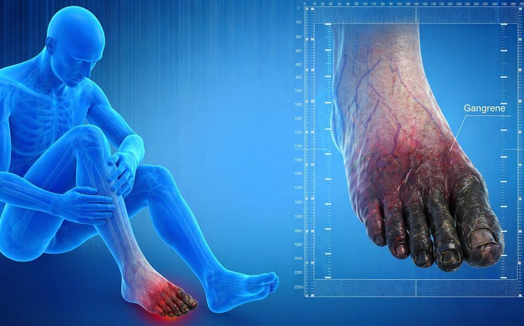
Gangrene is a serious condition in which body tissue dies due to a lack of blood supply, often resulting in a blackish discoloration of the fingers, toes, or feet.
Although it is more common in people with diabetes, gangrene can also occur in individuals without diabetes, particularly those with severe blockage of the arteries.
Gangrene represents an advanced stage of Leg Attack (Peripheral Artery Disease), where severely reduced blood flow causes tissue damage and death. If left untreated, the affected area can become infected, increasing the risk of serious complications and limb loss.
Treatment focuses on restoring blood circulation and preventing further damage. Depending on the severity of the condition, this may involve angioplasty, stenting, or bypass surgery, along with the removal of non-viable tissue when necessary. Early intervention plays a crucial role in preserving the limb and protecting overall health.
Gangrene is a medical emergency and requires immediate evaluation and treatment to save the limb and, in severe cases, save life.
Watch our videos and explore the infographics to learn more about gangrene, its warning signs, and the available treatment options.